

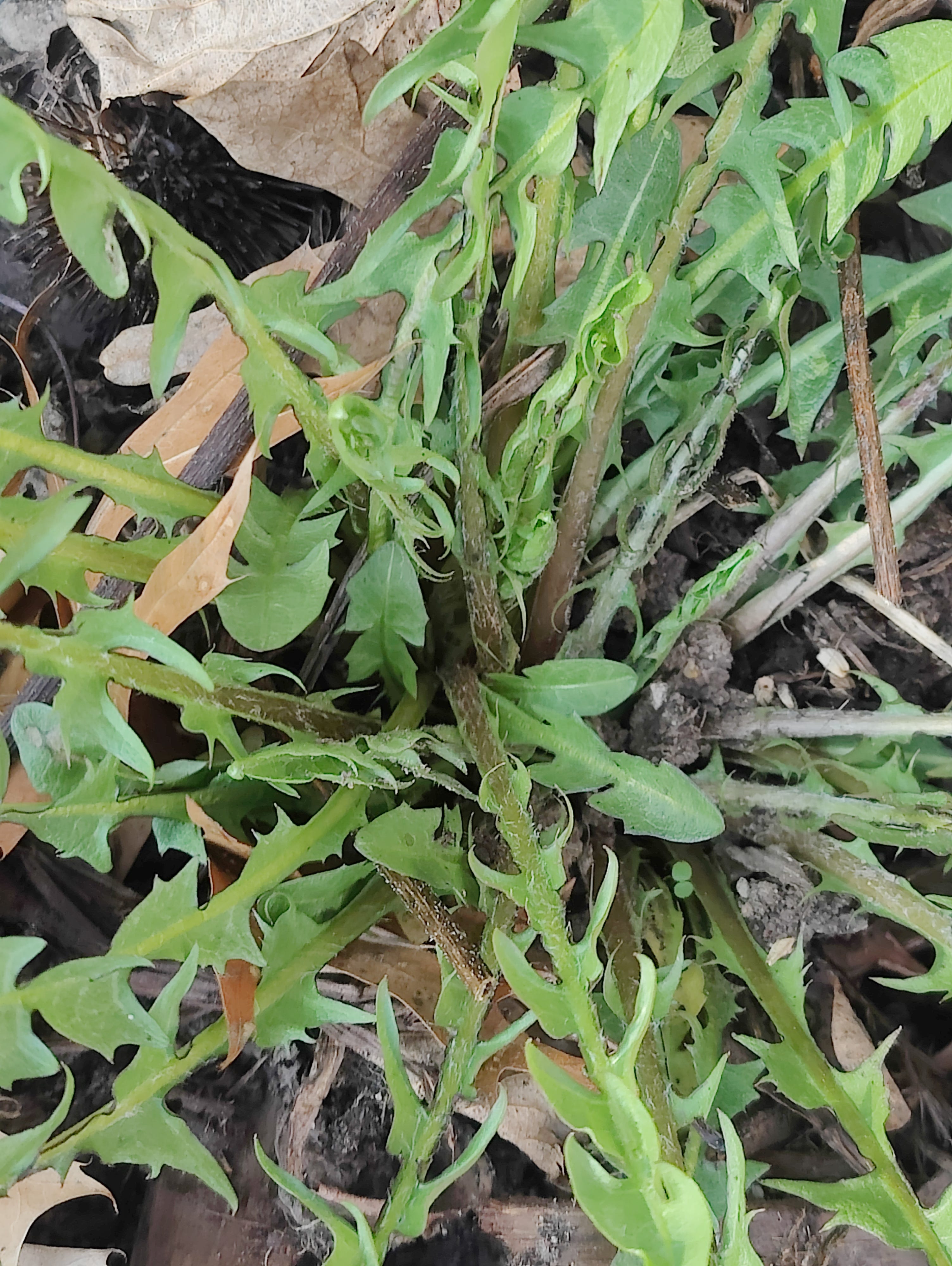
Dandelion growing in abundance this spring.
Fellow Seekers-
The chill of ICE on the neighborhood streets has abated, with some of it still lingering in air and earth. A tree I visit every day, an Oak, still holds onto their brown leaves from last year while the lilac has green buds on every brow tip.
The Lilac had struggled for a few years — sometimes losing all their leaves, sometimes the leaves would get black spots then fall off in a single day. Three years ago we had a double bloom. The following year, only half the bush bloomed. Last year, business as usual, the way these things sometimes quietly return to themselves.
Many of the Oaks in the neighborhood have held on to their leaves this season, but this particular one clutches them — releasing a few at a time, letting me watch them fall frayed to the ground, joining the rest scattered about, halfway to decay already. I have asked nature friends and naturalists the reason this sometimes happens. The experience usually occurs with juvenile trees. There are theories yet still a mystery.
When I sit with this Oak, and listen into the “how come?”, a slight droning sound resonates somewhere between us both. I have the feeling not safe yet. I exhale a breath I did not know I was holding, along with a few tears that needed to be shed.
Safety. I sit with this word and my thoughts return to food and hunger, to disconnection from our Land — physical hunger and spiritual hunger, not separate but deeply, stubbornly interconnected.
I knew what I would eventually have to work through — yet again — when the occupation occurred. My personal history with food insecurity. I am not a person targeted by metro surge, so I did what I could: MA distribution, delivery of food, showing up where I was able to. Pushing away my attention to that old solid scar until I had the capacity to tend to it properly. This is not a new experience. It is one I have learned to acknowledge and move with — unraveling its layers to be wound back up with healing prayers, knowing better than to expect a return to before times. Knowing also that the unraveling will be undone with future flares, again and again.
I felt the flare when funding was cut last year in 2025 for food shelves in March. Again in May/June. Again in October/November — harvest time, celebration time — when the shelves should be full and hands should be reaching for abundance rather than absence. There were more than double the visits to food shelves last year than in pre-pandemic times. More than double.
How can anyone feel safe when hunger is so present?
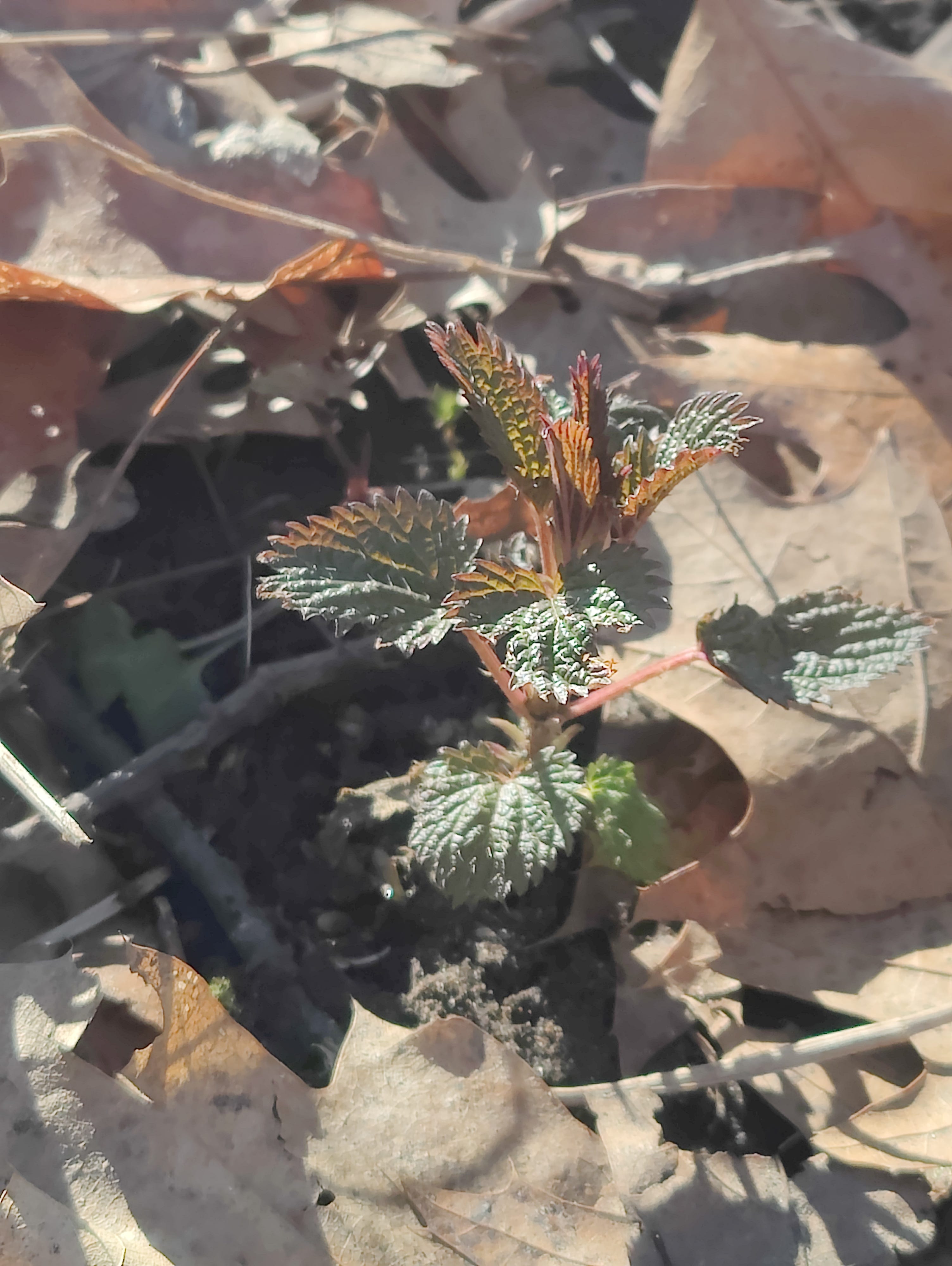
I think of Nettle, who comes up in early spring along wet ditches and fence lines, before almost anything else dares to emerge. They push up bold and stinging through the cold soil, green and fierce and wildly nutritious — iron, calcium, minerals the winter-tired body is crying out for. Nettle does not wait to be invited. They arrive when the Land says now, and they say: here, eat, be sustained. There is something almost furious and tender at once in that offering.
And then Dandelion — growing up through the cracks in the sidewalk, in the neglected corners of lots, in the unmowed margins. Every part of them edible. Every part of them medicine. They are not delicate about where they grow. They are not precious. They ask nothing of the soil that the soil cannot give and they return everything — their taproot breaking compaction, their flowers feeding the first bees. Dandelion, who most people call a weed while quietly the Land tends them as kin.
Both of these plant allies know something about safety and survival. They know how to feed a community from the margins. They know when to wait, and when the time finally arrives, when to come up roaring.
What does the Oak have to do with food? What does food have to do with safety? What does safety have to do with the Land?
Everything. And also: the Oak knows.
Land destruction contributes to food scarcity — I won’t unpack here the ways that gigantic agriculture practices disrupt the Land, move soil away from fields, require increasingly toxic chemistry just to coax something alive from what has been depleted. I won’t describe the low-quality food served in schools, or the way hunger has been made into something shameful and private when it is in fact a wound in the web of community, a wound in our relationship with the Earth. What I want to stay with — what I keep returning to — is this question of safety, and its connection to the spiritual and physical self as one body, one experience.
The Oak who will not yet release their leaves is not broken. They are listening. They are waiting for a sign that it is safe to let go, safe to begin again, safe to unfurl into whatever comes next. Marcescence — that is what it is called, this tendency of some trees to hold their dead leaves through winter — though why some trees do this more than others, why this Oak more than the rest, is still a mystery that science only half explains and the tree keeps to themselves.
What I know from sitting with them: there is wisdom in waiting. There is no shame in the body that says not yet. There is no weakness in the person who still carries the scar of hunger, who feels it flare when the shelves are cut, when the funding disappears, when the harvest season arrives and something in the gut remembers what it was like to be without.
We are not separate from the Land. Our hunger is the Land’s hunger. The poverty of our food systems is the poverty of our relationship with Earth. And the healing — the kind that is real and takes its time and doesn’t promise a clean return to before — will have something to do with roots. With going back down, underneath, into the place where the Oak’s roots hold, where Nettle waits in cold soil, where Dandelion’s taproot is already doing its slow, faithful work.
Not safe yet. But tended. But held. But still, quietly, waiting for the sign.
And watching the leaves fall, frayed and tawny, halfway to becoming something new.
Stay wild and true-
Emily
If you or someone you know needs food support in the Twin Cities, here are vetted neighbors and organizations doing this work:
🌿 Minnesota Mutual Aid — A living directory of neighbors helping neighbors across the state, including food shelves, emergency funds, and more. A good place to start.
🌿 Stand With Minnesota — A comprehensive, regularly updated hub for food distribution, rent support, and mutual aid across the metro and Greater Minnesota.
🌿 Twin Cities Food Justice — Working to get groceries to households through school and community networks. Email helpnow@tcfoodjustice.org to volunteer or connect.
🌿 Community Aid Network MN — Home delivery of food and household necessities to Minneapolis families. You can request help or sign up to deliver.
🌿 Calvary Food Shelf — Minneapolis-based grocery distribution with home delivery available. Call 612-285-3876 if you cannot come in person.
🌿 BrightSide Produce — Expanding access to fresh produce in the Twin Cities, fighting food insecurity through community-rooted distribution.
🌿 Minneapolis Northside Mutual Aid — Supporting housed and unhoused North Minneapolis neighbors with meals, heat, and essential needs.
You can also text for help quickly: 612-703-2992 or 612-432-7786.
These are not charity. These are neighbors reaching toward neighbors — the oldest and most honest form of care.
Still Wild Healing is a nature-guided therapy and healing practice in the South St. Paul area, rooted in the Dakota homeland of Mni Sota Makoce. If this letter found you in a moment of hunger — physical or spiritual — you are not alone. There are community resources, and there is also this: the Land is listening.
I would love to hear from you! Please let me know your thoughts by leaving a comment below.
Disclaimer:
**Climate aware work is challenging. If you feel like you need more support please text the crisis line at 741741.
The purpose of this information is for educational purposes only. Always seek the advice of your own Medical Provider and/or Mental Health Provider regarding any questions or concerns you have about your specific health. As always, please use common sense.
Services provided by Emily Grendahl Risinger and Still Wild Healing LLC are for educational purposes only. These statements have not been evaluated by the Food and Drug Administration. This information is not intended to diagnose, treat, cure, or prevent any disease. The Food and Drug Administration (FDA) classifies herbs as dietary supplements/food products, not medicines. Consult your healthcare provider before using any herbal supplements, especially if you are pregnant, nursing, have a medical condition, or take medications.