
Ancestor Eaters
A musing on white detachment, deep belonging, and learning to love the land as family

Fellow Seekers-
There is a saying in Irish my mentor Amantha Murphy shares. I keep turning over like a stone in my palm: we eat our ancestors. The land becomes the body, the body becomes the food, the food becomes us. Generation after generation, the same soil passes through the same bloodlines, until the boundary between person and place dissolves into something more like kinship than geography.
I sit with this saying and feel, underneath it, something I do not have.
My people have been on this Land — this land, the river-carved bluffs and oak savanna and cold black soil of what is now called Minnesota — for perhaps four generations. On my most generous count. Before that: England, Ireland, Germany, Scandinavia. SOme of these places I have never been. Places whose stones my hands have never touched. And before those places? Lost. The migration and the violence of colonization did their particular work of severing, and most of us who carry white skin carry also this: a kind of geographic orphanhood. We arrive on Land and we call it home, but we have not eaten it. We have not been eaten by it in return.
This is one of the quiet, under-examined roots of white detachment from the living world.
Subscribe and ponder the world with me
When I speak with some clients about climate grief, about the particular ache of watching a world we love come undone, they often describe something beneath the grief — a kind of longing that has no name. Not just sadness at what is being lost, but mourning for a belonging that was never fully formed. How do you grieve the death of a beloved when you never quite knew the beloved? When your relationship was built on ownership rather than reciprocity, on use rather than love?
White settler culture teaches us to relate to land as property — to be acquired, developed, extracted from, passed along. It does not teach us to belong to it. We are not shown how to notice that the cottonwood near the river dreams differently than the cottonwood on the hill. We are not given the tools to learn the specific grief-language of late autumn in this watershed, or the way the soil here smells after the first rain of May as though it has been waiting, specifically, for us to come home.
And so we float. Owning but not belonging. Present but not rooted. Fed but not nourished.
I have been sitting lately with something that comes from many Indigenous traditions — the phrase that opens ceremony, or prayer, or the act of stepping onto land with intention: Welcome, all my ancestors. Welcome, all my relations.
What stops me every time I hear it is the all.
Not just the blood ancestors. Not just the ones who share your particular lineage or language or story. All of them. The ones who walked this river valley ten thousand years before you. The ones who planted, burned, tended, grieved, celebrated, and were buried in this very ground. The ones you carry no genetic memory of, but whose hands still, in some sense, shaped the place your feet now stand.
This is a radically different cosmology than the one most white settlers were handed. It asks us to consider that kinship is not only biological. That ancestry is not only personal. That when we step onto Land — any Land — we are stepping into a web of relationship that precedes us by millennia, and that we are, therefore, already in relationship with people and beings whose names we do not know.
We are family, whether we have the language for it or not.
And here is where I find myself doing something that I do not entirely have words for yet.
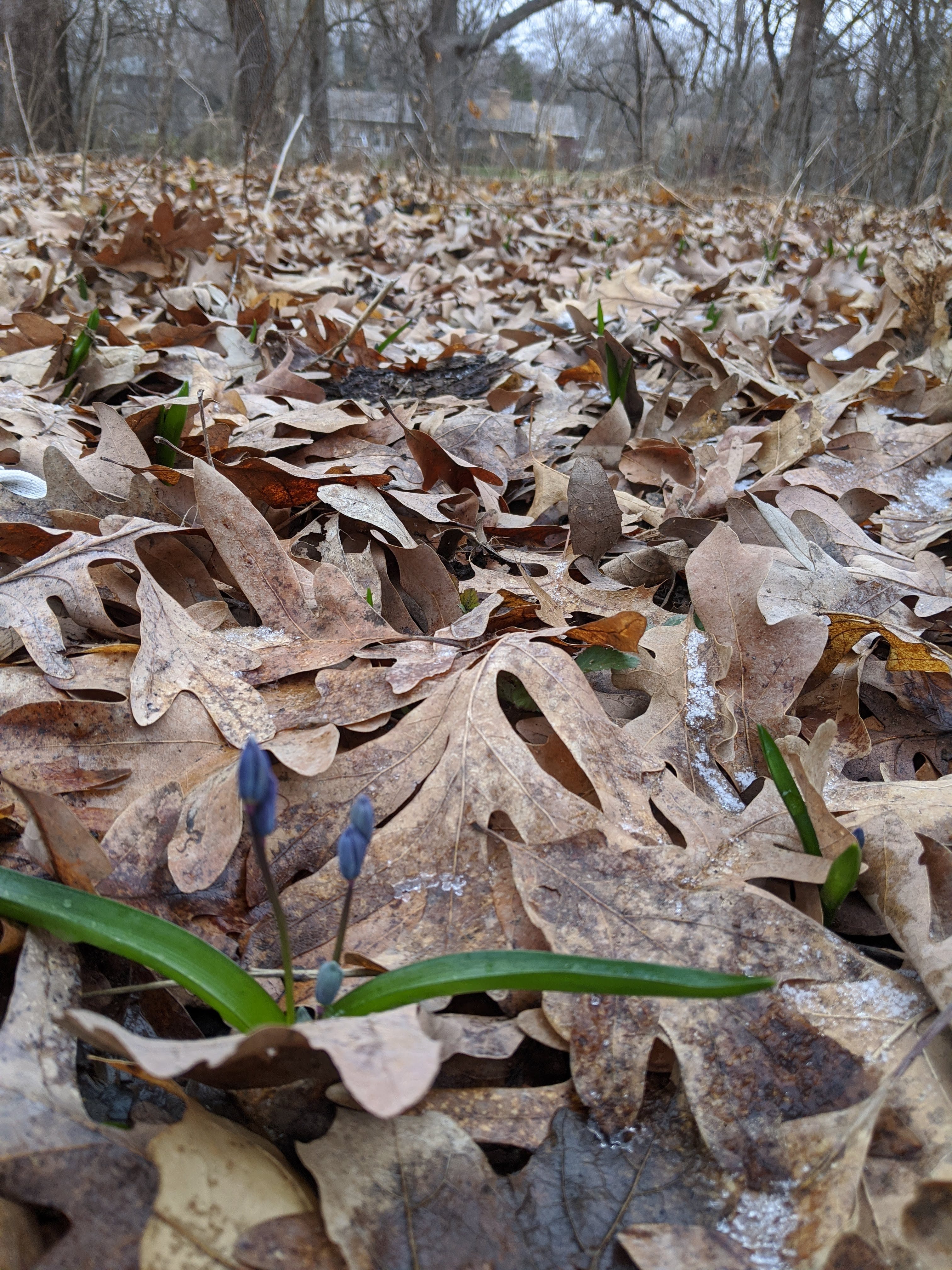
I have lived in this place long enough to notice it. To begin, tentatively, to love it. The way the red-tailed hawk holds still in the thermals high above on a January afternoon. The particular quality of light through the oaks in October. The way the Land itself seems to exhale in early April, something loosening and brightening, almost audible.
I find myself — and I hold this gently, because it raises questions I am not sure I can answer — drawn into a feeling I can only call love toward the people who knew this place so much more deeply than I do. The Dakota people, who have lived in relationship with Mni Sota Makoce — the land where the waters reflect the sky — for time beyond my accounting. Their ancestors, and their ancestors’ ancestors. The ones who intimately knew each bend in the river, who understood the medicine in every plant I am only now beginning to learn, who held this place not as property but as mother.
There is something in me that wants to love them. Wants to receive them as the Elders of this place, even across a distance of time and my own profound unknowing.
And I have to sit with the questions this raises.
Is this a true relationship, or a projection? Am I reaching for connection in a way that romanticizes rather than respects? When I feel moved by the Land these ancestors tended, am I honoring them — or am I taking something again? Is it possible for a white settler woman, the inheritor of violent dispossession, to be in genuine kinship with the people whose belonging was stolen, in part, by her lineage?
I do not know.
I think back to the bur oak savanna. Steady, strong and abundant until European settlers arrived. The depletion of the bur oak savanna was not due to over-harvest, rather settlers misunderstanding the Land and prohibiting burning. More mistakes from detachment echoing back that longing. I look to the Land themselves for what detachment has cost.
That longing itself feels important to stay with rather than dismiss. Not to act on carelessly. Not to claim. But to let it teach me something about what it means to be a latecomer to a place. To understand myself as a guest in a house with a long history I am still learning. To practice the particular discipline of loving something I did not earn and cannot own — loving it anyway, with open hands, with grief for what my people have done here, with genuine attention to the living beings, human and more-than-human, who call this place home.
Maybe this is how descendents of settlers begin to learn what the Irish knew in their bones. Not through time alone — though time helps — but through intention. Through choosing, generation by generation, to stop floating and to start learning the names. The grief-languages. The specific medicine of this specific watershed. To let the Land begin, slowly, to eat us.
And perhaps, if we are very patient and very honest and willing to be humbled, to begin — in some small way — to eat it back.
What does it mean to you to be in right relationship with the Land under your feet? What ancestors — not only your own — does that Land hold? I would love to sit with these questions alongside you. Reach out should you like to schedule a session.
Stay wild and true,
Emily
I would love to hear from you! Please let me know your thoughts by leaving a comment below.
Sites of interests:
https://www.nps.gov/miss/learn/nature/prairestoaks.htm
https://theprairieenthusiasts.org/about-us/our-chapters/minnesota-oak-savanna/
Disclaimer:
**Climate aware work is challenging. If you feel like you need more support please text the crisis line at 741741.
The purpose of this information is for educational purposes only. Always seek the advice of your own Medical Provider and/or Mental Health Provider regarding any questions or concerns you have about your specific health. As always, please use common sense.
Services provided by Emily Grendahl Risinger and Still Wild Healing LLC are for educational purposes only. These statements have not been evaluated by the Food and Drug Administration. This information is not intended to diagnose, treat, cure, or prevent any disease. The Food and Drug Administration (FDA) classifies herbs as dietary supplements/food products, not medicines. Consult your healthcare provider before using any herbal supplements, especially if you are pregnant, nursing, have a medical condition, or take medications.